

Blog
Titanium Fiber vs. Carbon Fiber in Pickleball Paddles: A Deflection-Driven Power Comparison

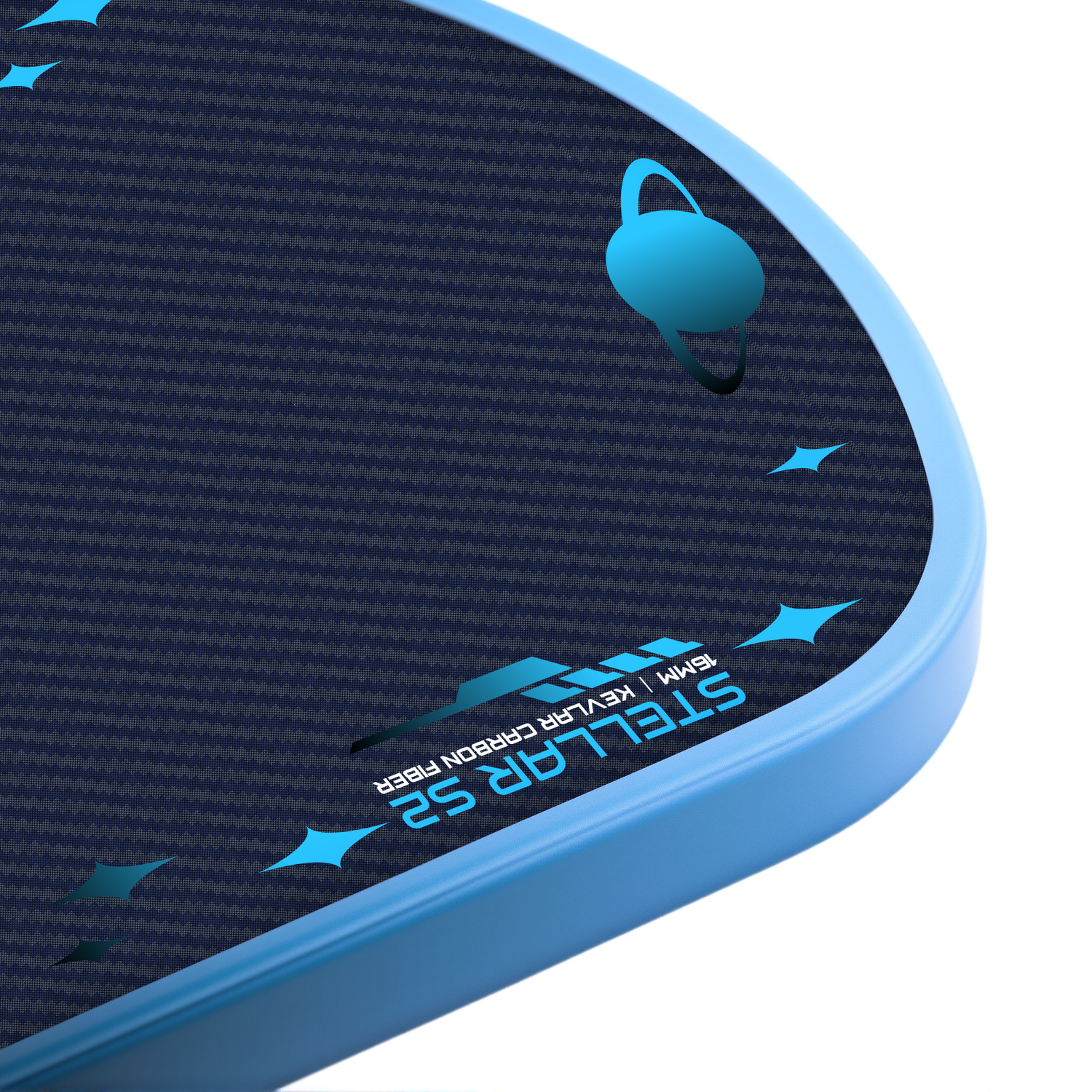
When people talk about paddle materials, carbon fiber is the default benchmark. But over the past year, titanium fiber (Ti-fiber composite) has emerged as one of the most exciting experimental surfaces in pickleball engineering — valued for its elasticity, resilience, and uniquely metallic energy transfer.
Unlike Kevlar — which softens feel and lowers pop — titanium fiber shifts in the opposite direction. It introduces power potential that carbon fiber alone cannot match, especially when analyzed through Deflection and PBCOR, the two metrics now shaping material selection across OEM and pro-paddle R&D.
If Kevlar is feel-oriented, Titanium is power-oriented.
1. Why These Metrics Matter Most
Deflection
How much the paddle face bends at impact.
- Lower deflection → stiffer → sharper control
- Higher deflection → more elastic → more rebound power
Titanium sits between carbon and fiberglass in elasticity — not soft like aramid, but not rigid like pure carbon. This becomes important when we examine power transfer.
PBCOR (Coefficient of Restitution)
How much energy the paddle returns to the ball.
- Higher PBCOR = more pop
- Lower PBCOR = more controlled energy
Titanium’s metallic character increases rebound efficiency, often producing a faster ball exit speed without requiring a high swing load.
2. Carbon Fiber: Still the Most Stable Control Surface
Performance Snapshot
PropertyResultDeflectionLow (rigid)PBCORModerateSweet SpotWell-definedSurface ProfilePredictable friction, consistent spin
Carbon fiber works because it’s reliable — stiff, stable, and feedback-pure. What you input is what you get. Competitive control players rely on this predictable low-deflection behavior to keep resets flat and safe.
But carbon fiber doesn’t boost energy on its own. It responds — it doesn’t amplify.
3. Titanium Fiber: A Different Mechanical Behavior
Titanium fiber isn’t just “metal woven into fabric.” Its performance characteristics under load are dramatically different.
How Titanium Affects Deflection
Titanium fiber introduces micro-elastic deformation:
- Deflection slightly higher than carbon
- Creates stored energy during compression
- Returns energy explosively once released
This creates what players describe as “snap power” — power generated from paddle flex and recovery instead of arm acceleration alone.
How Titanium Affects PBCOR
This is where titanium stands out.
Titanium fiber surfaces generally exhibit:
PropertyPerformance ImpactPBCORHigher than carbonEnergy ReturnFaster + more aggressiveOutput StyleExplosive pop vs linear carbon
Players feel this as instant rebound — not trampoline-loose like cheap fiberglass, but spring-efficient, fast, metallic.
4. On-Court Feel Comparison
FeatureCarbon FiberTitanium FiberDeflectionLowMediumPBCORMediumHighFeelCrisp, directSnappy, elasticPowerPlayer-generatedMaterial-generatedDwell TimeShorterModerate
In gameplay terms:
- Carbon controls
- Titanium accelerates
Carbon helps you place the ball. Titanium helps you drive it.
5. Where Titanium Makes a Noticeable Difference
Titanium-integrated paddles shine in scenarios where ball speed matters:
✔ Punch volleys at the kitchen ✔ Speed-up exchanges ✔ Drives & serves where rebound adds speed ✔ Counter-punching against aggressive hitters
Players who rely on offense often describe Ti-fiber as:
“More pop without losing face stability.”
A crucial distinction — titanium adds power without ballooning deflection into soft-face territory. It enhances PBCOR efficiently rather than simply increasing dwell.
6. So Should Titanium Replace Carbon?
Not exactly — but it fills a gap carbon fiber cannot.
Ideal ForMaterialMaximum control & spin stabilityCarbon FiberResponsive energy + offensive popTitanium FiberBalanced hybrid dwell + feelKevlar-Carbon (Prev. article)
The future may not be carbon vs titanium, but carbon + titanium composites tuned to USAP limits through deflection & PBCOR targeting.
When carbon handles control and titanium drives rebound, paddles become weapons instead of only instruments.

 Canada
 USA
USA Japan
Japan